

Obsidian Beads: A Companion on the Wrist
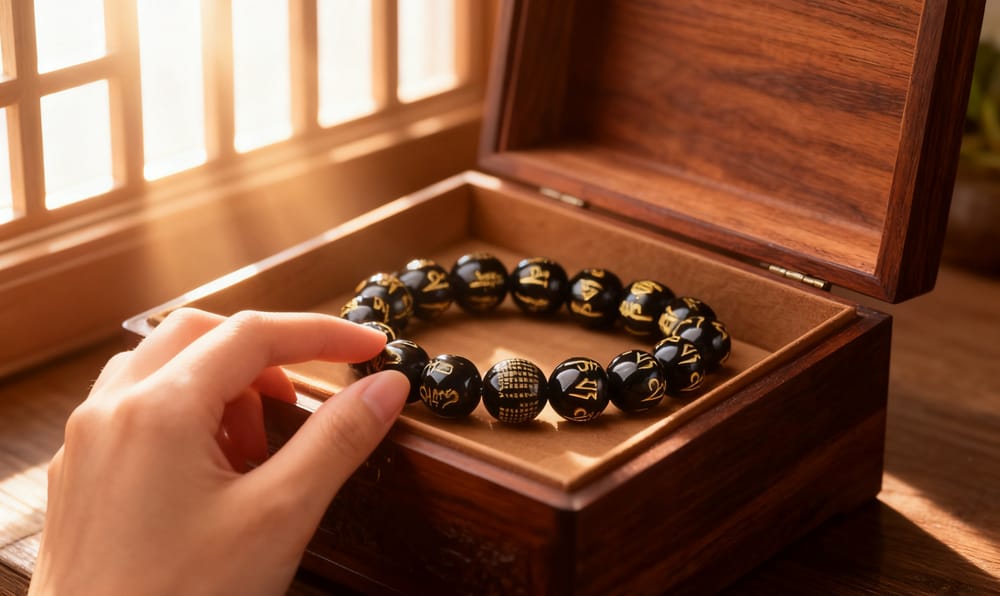
When I dress my hair in the morning, my fingertips brush against the obsidian prayer beads in my jewelry box. A cool sensation spreads along my fingertips, like touching a piece of jet jade fished from a mountain stream. This deep black doesn’t feel dull in the morning light; instead, it emanates a calm glow. Such a "black spiritual object" is never just an ordinary accessory—it’s a thoughtful token of protection woven into daily life.
"All things hold energy," and obsidian’s energy is one of "gathering." Modern life keeps us busy from 9 to 5: we weave through traffic-clogged streets to get to work, and disagreements inevitably arise in the office. These visible disturbances are all sources of "dispersing energy" in feng shui. Wearing an obsidian bracelet around the wrist—precisely an "energy hub"—connects to the heart. The bead’s coolness acts like an invisible soft barrier, keeping messy "turbid energy" at bay. It’s similar to how elders used to carry a piece of jet jade in their pockets to calm their nerves before going out; today, this string of beads is a portable "mini feng shui arrangement."
Its water-element energy hides in small details. On nights I stay late at work, I unconsciously stroke the beads, and the restlessness in my chest fades like it’s being washed away by warm water. In feng shui, "water governs nourishment," and obsidian’s water energy is awakened through such slow, gentle movements. When stuck in traffic or troubled by a difficult client, touching the black beads on my wrist feels like clutching a handful of cool stream water. The "irritated energy" welling up inside is absorbed by the beads, grounding me. That’s the subtle magic of obsidian in feng shui: unassuming, yet its protection lingers in every casual touch of daily life.
Mantras Carved in Beads
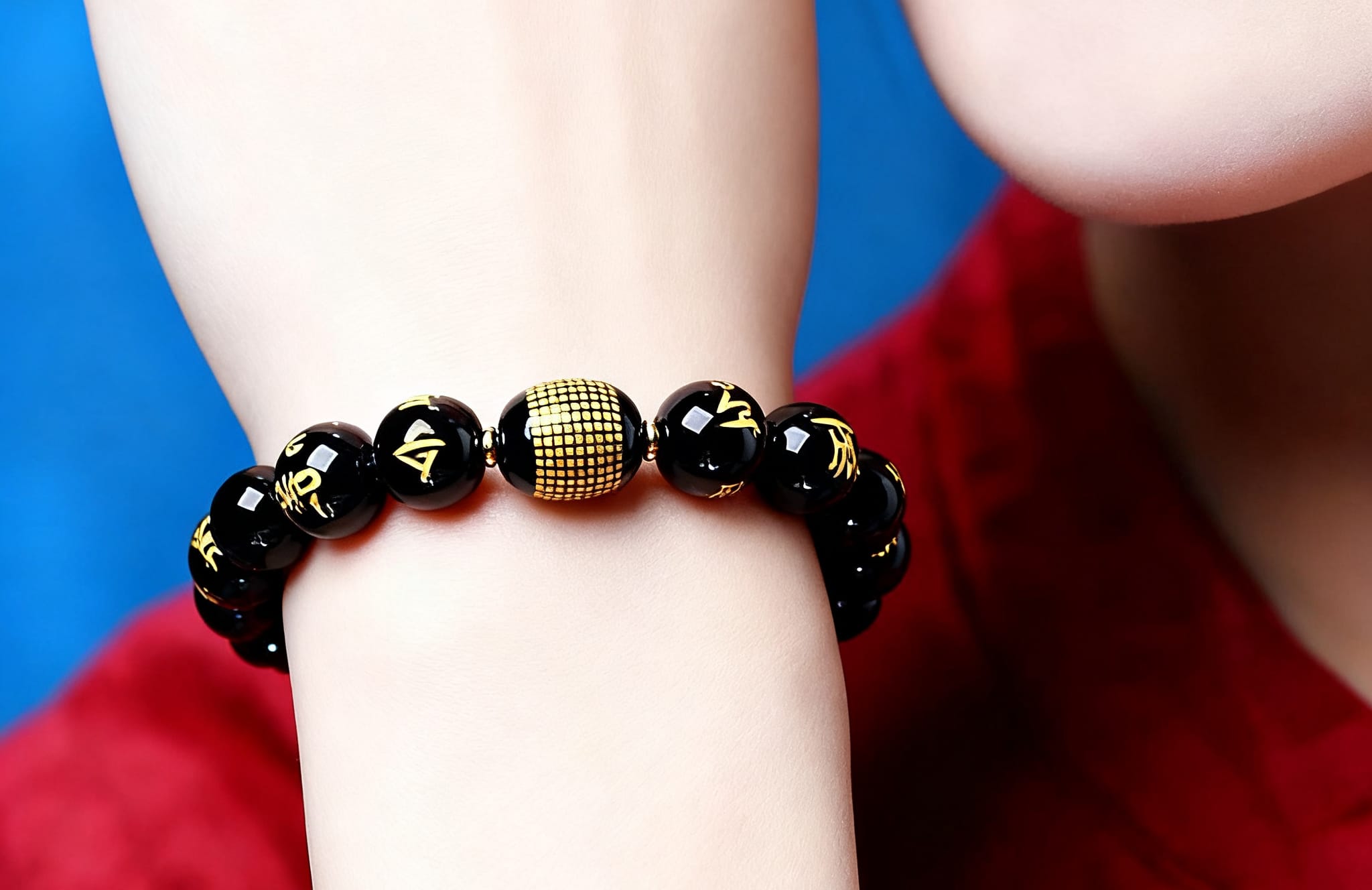
As my fingers glide over the carved lines on the beads, the ridges of the six characters—Om, Ma, Ni, Pad, Me, Hum—press against my fingertips, like a silent mantra written in the palm of my hand. In feng shui, "words are living energy," and these ancient mantras, passed down for millennia, carry upright energy that dissolves disturbances in every stroke.
I once thought twirling prayer beads was just a ritual, but later realized the action itself is feng shui. During lunch breaks at my desk, I roll the beads one by one between my fingers. When the bead carved with "Ma" touches my fingertip, the grievance from my boss’s criticism that morning lightens. "Mantras dissolve negativity"—it’s not magic in the beads, but the repeated motion and the upright energy in the words that gradually smooth the "blockage" in my heart. Like the stone lions at the gate of an old mansion, which don’t truly ward off disasters but calm people with their imposing presence, this string of beads aligns messy energy as I twirl it.
Once, I argued with a friend and grew angrier the more I thought about it. I reached for the beads on my wrist and twirled them without thinking. Suddenly, I remembered that "Hum" means "stability." The anger in my chest deflated like a pricked balloon. It turned out the beads don’t work by "guarding the space" like a decoration; instead, each twirl helps align my energy with the mantra’s, allowing negative energy to disperse.
In the evening, as I sit at my desk reading, my sleeve slips down, and the Heart Sutra bracelet’s beads press against my arm, warm to the touch. This obsidian string, etched with the entire sutra, is less direct than the Six-Syllable Mantra beads—more like a tiny book tucked around my wrist, gently holding the feng shui principle of "literary energy protecting the heart."
People often say, "A chaotic heart scatters energy." The modern curse is "restlessness": scrolling through phones fuels anxiety, overthinking breeds confusion. When energy scatters, negative energy slips in easily. The Heart Sutra’s teaching of "freedom from attachment" is the perfect antidote to this restlessness. Once, I rushed to finish a project report until midnight. My eyes blurred from staring at the screen, and panic crept in—until my wrist brushed the character "emptiness" on a bead. Suddenly, I recalled the sutra’s line "Form is emptiness": no matter how urgent the task, there’s no need to disrupt my own energy.
The feng shui of this bracelet lies in its "skin-to-skin" detail. Unlike decorations that require specific placement, it stays close to my arm. The energy of the sutra seeps through my skin, like a soft armor wrapping my heart. Once, I took my parents for a medical check-up. While waiting, my mom held my hand, felt the bracelet, and asked what it was. I recited, "Guan Yin Bodhisattva"—she didn’t fully understand, but she calmed down. That’s the nature of "literary energy" in feng shui: no need for grand explanations. As long as the words and the beads are nearby, people naturally settle. A settled heart stabilizes energy, and negative energy can’t approach.
Protection by Your Side
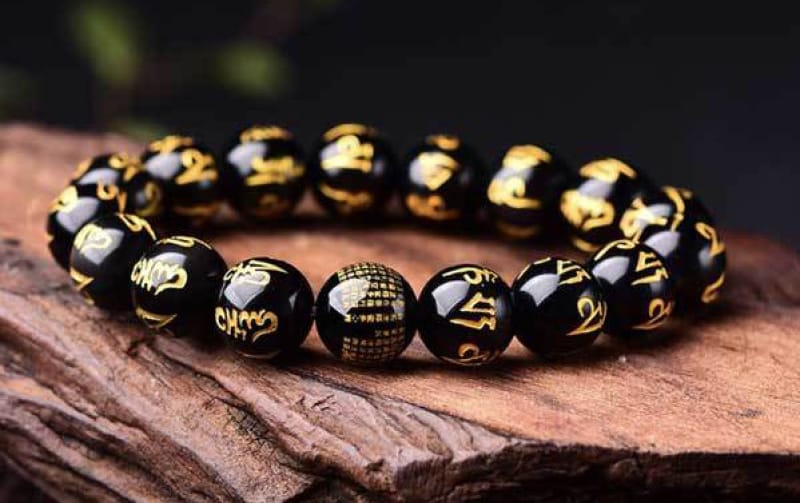
One rainy day, I rushed for the subway, jostled by the crowd until I lost my balance. My hand hit the railing, and my first thought was to check the beads on my wrist—they were unbroken. In that moment, I understood: obsidian’s "protection" isn’t about warding off disasters. It’s about giving a sense of security, like having someone to lean on. That’s its true feng shui power.
In feng shui, "stones govern stability," and obsidian hides its strength in gentle protection. Once, I traveled for work and stayed in a hotel. The room’s energy felt off, and I tossed and turned all night—until I placed the bracelet by my pillow. The cool touch of the beads beneath my fingertips helped me drift off. Later, I learned from feng shui that unfamiliar spaces hold heavy "disordered energy." Obsidian acts like a tiny magnet, gathering scattered energy and helping you find a sense of "stability" even in strange places.
"Strength" here isn’t about being powerful—it’s about holding on when you’re weak. Once, I lost an important document and was on the verge of tears. I touched the beads on my wrist and remembered the calm I felt while twirling them. I took slow breaths, retraced my steps, and eventually found the document. Obsidian’s strength lies in giving you a touch of "steadiness" when you’re flustered—like a small lamp in your hand when walking at night. It doesn’t need to light the entire path, but it gives you the courage to keep going. That’s the subtlety of its feng shui: no grand promises, just protection when you need it most.
On weekend afternoons, I gently wipe the beads with clean water. As the water flows over the sutra-carved grooves, dust washes away, leaving the beads glowing in the sun. Feng shui teaches that "nurturing an object nurtures its energy." This obsidian string isn’t just a purchase—it needs care, like a potted plant, to gradually develop energy that aligns with yours.
While wiping, I silently chant a few lines of the Heart Sutra. It’s not a deliberate ritual, but a moment of pure calm when my energy connects with the beads. Once, as I wiped the characters "Paramita," I remembered the first time I wore the bracelet. Back then, the beads felt cool; now, they feel warm. It turns out the feng shui bond between a person and their beads is forged over time. Just as an old silver bracelet develops a patina with wear, this obsidian string absorbs its owner’s energy. You protect it, and it protects you.
When I’m not wearing it, I place it on a small plate on my desk, facing the window. In feng shui, "windows are energy portals." Letting the beads catch sunlight isn’t about warming them—it’s about letting them absorb "yang energy" to recharge. Once, I forgot to take it on a trip. When I returned, I found the beads on the plate, with sunlight shining right on the character "Om," as if waiting for me. In that moment, I realized: the feng shui of this obsidian string isn’t just book knowledge. It’s hidden in every small detail—wiping, placing, wearing—and in the bond slowly nurtured between a person and their spiritual companion.
Related Products


Leave a Comment